- Home
- Commercial Cleaning
- Kitchen Extraction Cleaning
Greasy Kitchen Extract? We Clean It and Cut Your Fire Risk
Kitchen Extraction Cleaning in Merseyside
Commercial Kitchen Extraction Cleaning for Restaurants, Pubs and Takeaways
Kitchen Canopy Cleaning and Kitchen Duct Cleaning Across Liverpool and Merseyside
- Unmarked vehicles
- Fully insured
- Free, no obligation quote
No Mess Too Much provides kitchen extraction cleaning for commercial kitchens across Merseyside. We clean the canopy, filters, ducts and fans, so your kitchen extraction system stays safe and your insurer stays happy.
Grease hides inside your kitchen extract system and builds up every shift. Our kitchen extract cleaning service removes it before it becomes a fire.
Whether you run a restaurant, pub, takeaway, café, hotel or factory canteen, our kitchen extract cleaning services suit your commercial kitchens, as part of our wider commercial cleaning services.
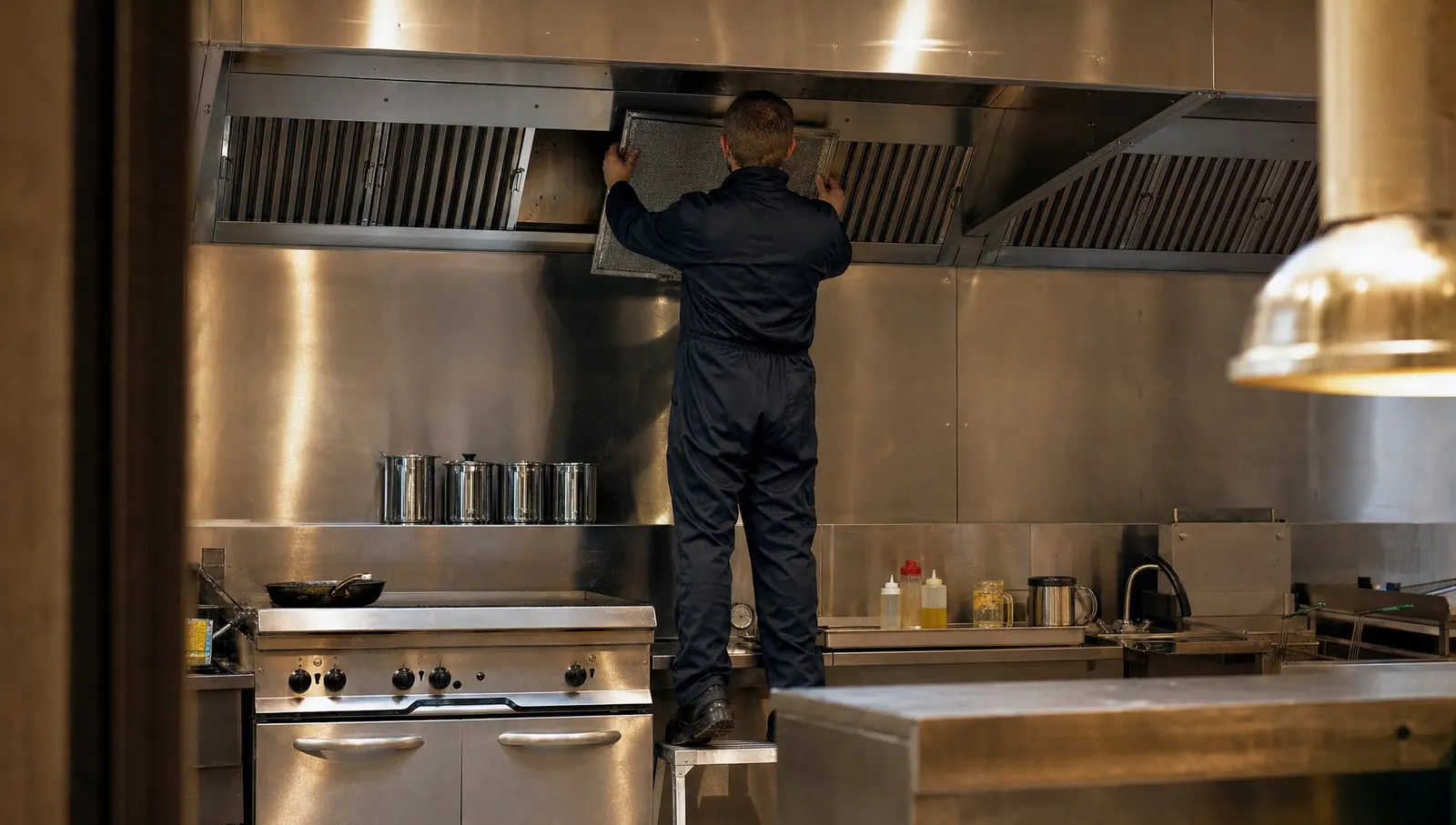
 Canopy clean
Why Kitchen Extraction Cleaning Matters for Commercial Kitchens in Merseyside
Merseyside Has Thousands of Commercial Kitchens That Need Looking After
+Merseyside had 11,498 registered food businesses in November 2026. That includes 4,554 in Liverpool, 2,402 in Sefton, 2,320 in Wirral, 1,386 in St Helens and 836 in Knowsley. Not every one runs a grease extraction system, but thousands are restaurants, cafés, pubs, takeaways and other catering premises.
Nearly 40% of those businesses are in Liverpool. Across the UK, the food-hygiene database held 614,986 food-business records.
Grease Build Up Is a Major Fire Hazard in Every Kitchen Extract System
+Merseyside recorded 142 accidental fires in commercial premises in 2024/25. The estimate for 2025/26 was 151. That covers all business types, not only kitchens.
Fires in takeaway and fast-food premises rose by 16.7% over the decade to 2023/24, from 12 incidents to 14. The numbers are small, but busy commercial kitchens need strong fire safety controls.
Government fire safety guidance names excessive grease in catering extraction equipment as a fire risk. It says ducts and filters above cooking equipment should be cleaned regularly.
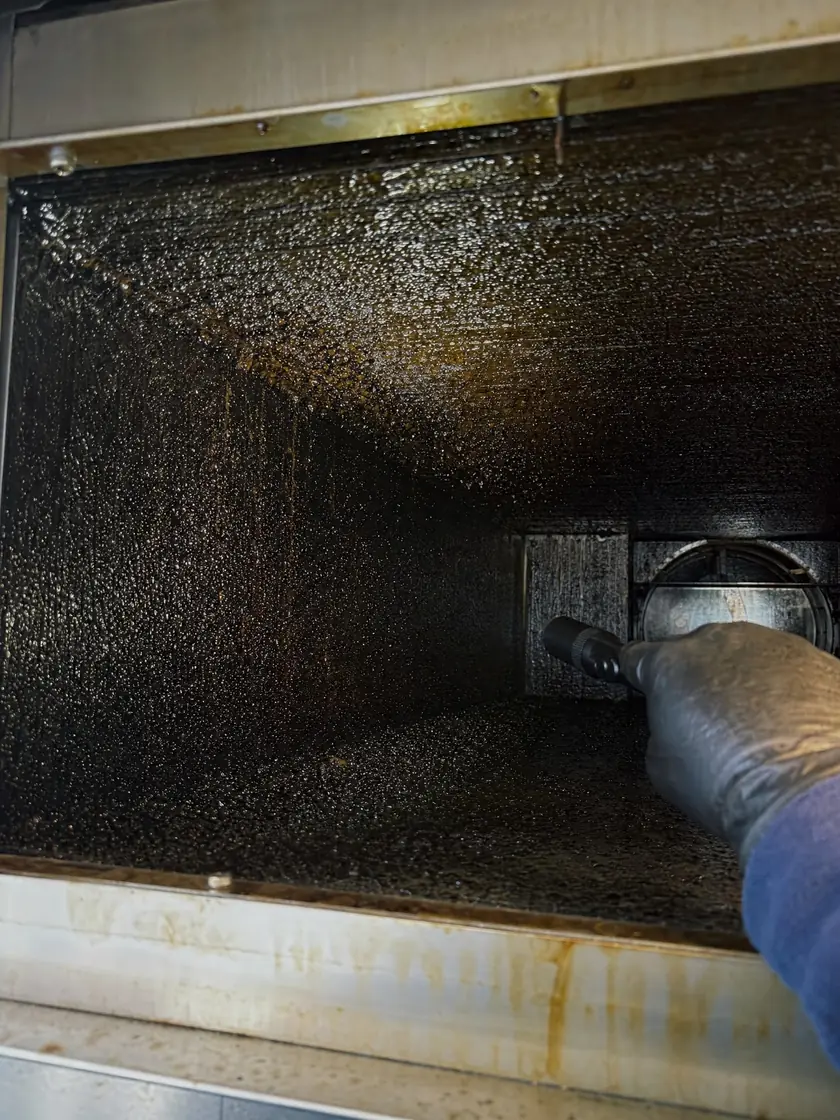
Every kitchen extraction system collects grease, even with good filters. Some airborne oil and grease settles inside the canopy, ductwork and extract fan, where wiping never reaches. A clean-looking canopy does not mean clean ductwork, because grease hides in ceiling voids, bends and roof-mounted fans.
Daily kitchen cleaning only covers surfaces, so build up inside the ducts stays a fire hazard and a serious fire risk. Fire risk assessors and fire safety regulations expect proof of cleaning.
Regular Cleaning Is the Simplest Way to Reduce Fire Risks
+Regular cleaning keeps grease buildup and grease levels low, helps you reduce fire risks and prevent fires between visits, and supports fire safety, system efficiency and the safety regulations.
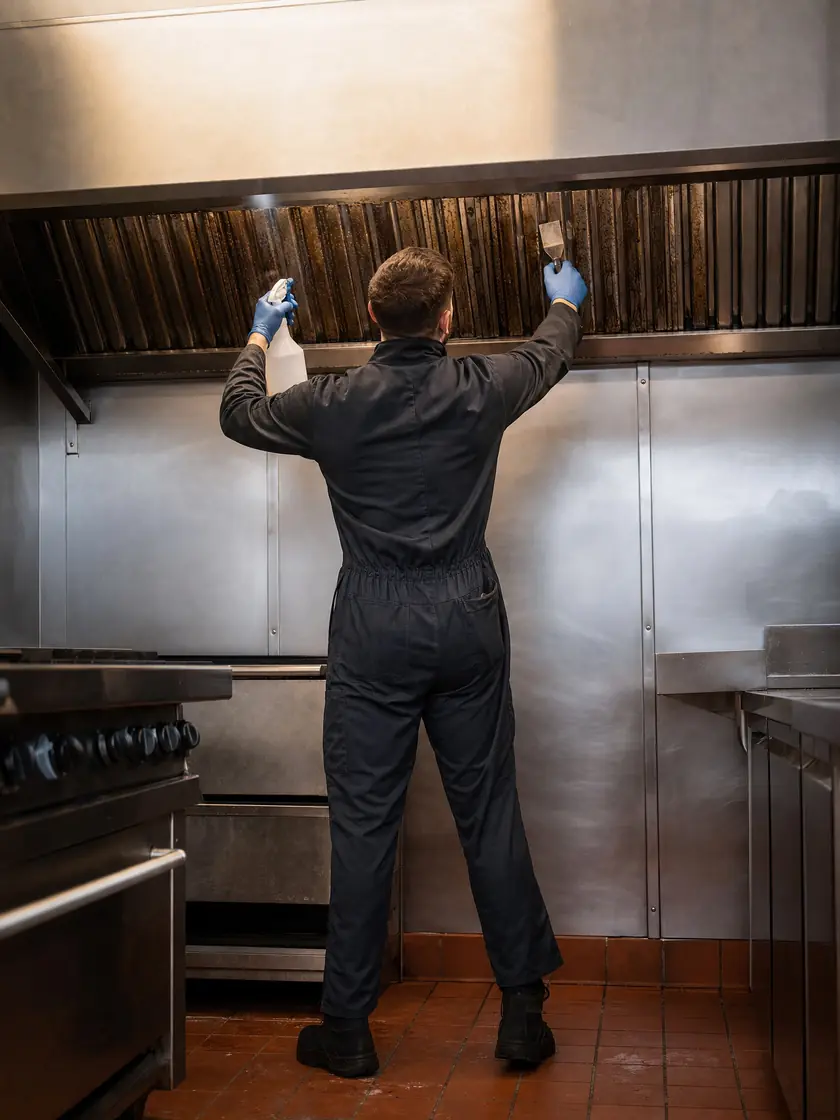
 Why it matters
What Our Kitchen Extraction Cleaning Service Covers From Canopy to Fan
We Clean the Whole Kitchen Extraction System, Not Just What You Can See
+Our kitchen extraction cleaning includes ductwork, fans, hoods and filters. We open the access panels to reach what a quick wipe misses. Cleaning only the visible parts of a kitchen extraction system is never enough.
We get kitchen extraction systems clean from canopy to roof fan. This is air duct cleaning built for greasy air, and it covers your whole kitchen ventilation system.
Our Cleaning Process Removes Grease, Carbon and Other Contaminants
+Every job starts with an obligation survey. We look at your extraction system size, how you cook and what your insurer expects. Then we check the system meets the guidance for your type of kitchen and identify areas in the extraction system and ventilation system that need extra attention.
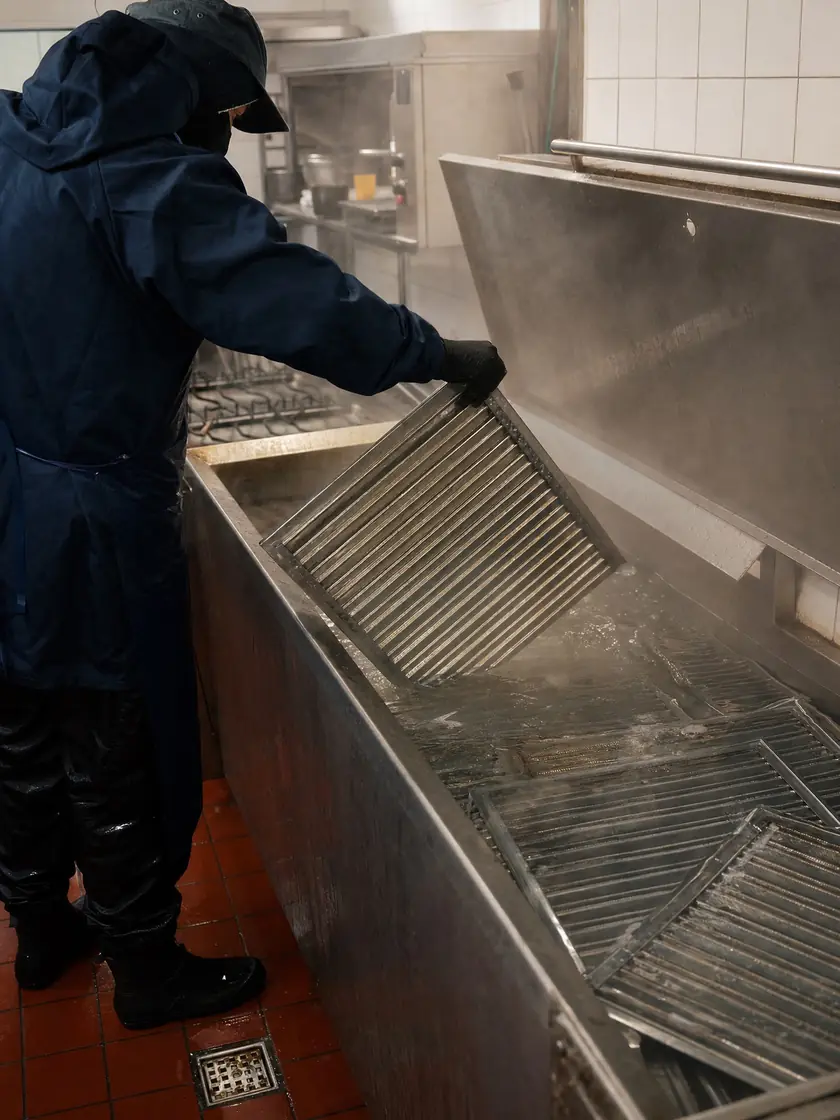
Next comes the deep clean. Our expert technicians remove grease, carbon deposits, other substances and other contaminants from the canopy, filters, ducts and extractor fans. Mechanical high-pressure cleaning shifts stubborn deposits, and baked-on grease gets specialised methods.
This is meticulous cleaning, and proper cleaning means bare metal, not a shiny surface. Our cleaning process is the same on every site, though a first deep clean on a neglected kitchen extract system takes longer.
Commercial Kitchen Extraction Systems We Clean for Businesses Across Merseyside
+We clean commercial kitchen extraction systems in restaurants, pubs, takeaways, cafés, hotels, hospital kitchens, factory canteens and dark kitchens. A new tenant may take over a greasy unit, an insurer may ask for proof of kitchen extract cleaning, or staff may complain about smells and heat.
We clean commercial kitchen extract ducts on rooftops and in basements, from café fryers to hotel kitchen grease extract ductwork. If you run several commercial kitchens across Wirral, Sefton and Liverpool, our team can book them in together.
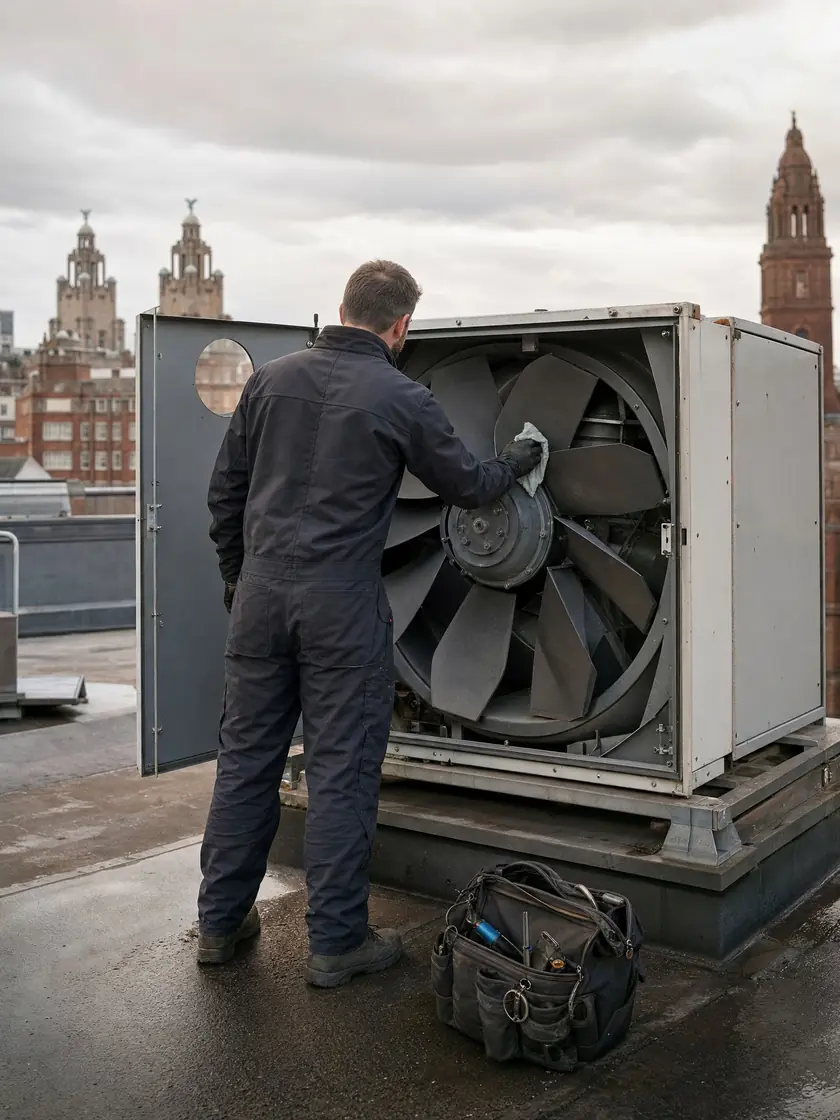 Canopy to fan
How Often Must Kitchen Extraction Be Cleaned?
The Recommended Cleaning Frequency Depends on How Much You Cook
+The recommended cleaning frequency depends on how long your kitchen runs and how much grease build up that creates. Industry guidance gives these starting points:
- Heavy use: cleaning every three months
- Moderate use: cleaning every six months
- Light use: cleaning once a year
Under TR19 Grease from the Building Engineering Services Association, those labels usually mean 12 to 16 hours a day for heavy use, 6 to 12 for moderate use and 2 to 6 for light use. Hours include prep time, so if you start cooking at 10am, count from 10am.
Your Menu and Cooking Style Can Mean More Frequent Cleaning
+Fryer cooking, wok cooking, chargrilling and solid-fuel cooking leave heavier deposits than ovens and steam.
Solid-fuel systems must be thoroughly examined and tested at least every 14 months, alongside a regular maintenance and cleaning plan. Your kitchen extraction system should be cleaned when your cooking says so, and we build regular kitchen extraction cleaning around your menu, so ongoing maintenance never slips. If you need the full TR19 certificate service, ask us.
 How often
What Happens If Kitchen Extraction Is Not Cleaned?
Grease Deposits Turn Ductwork Into a Route for Fire and Smoke
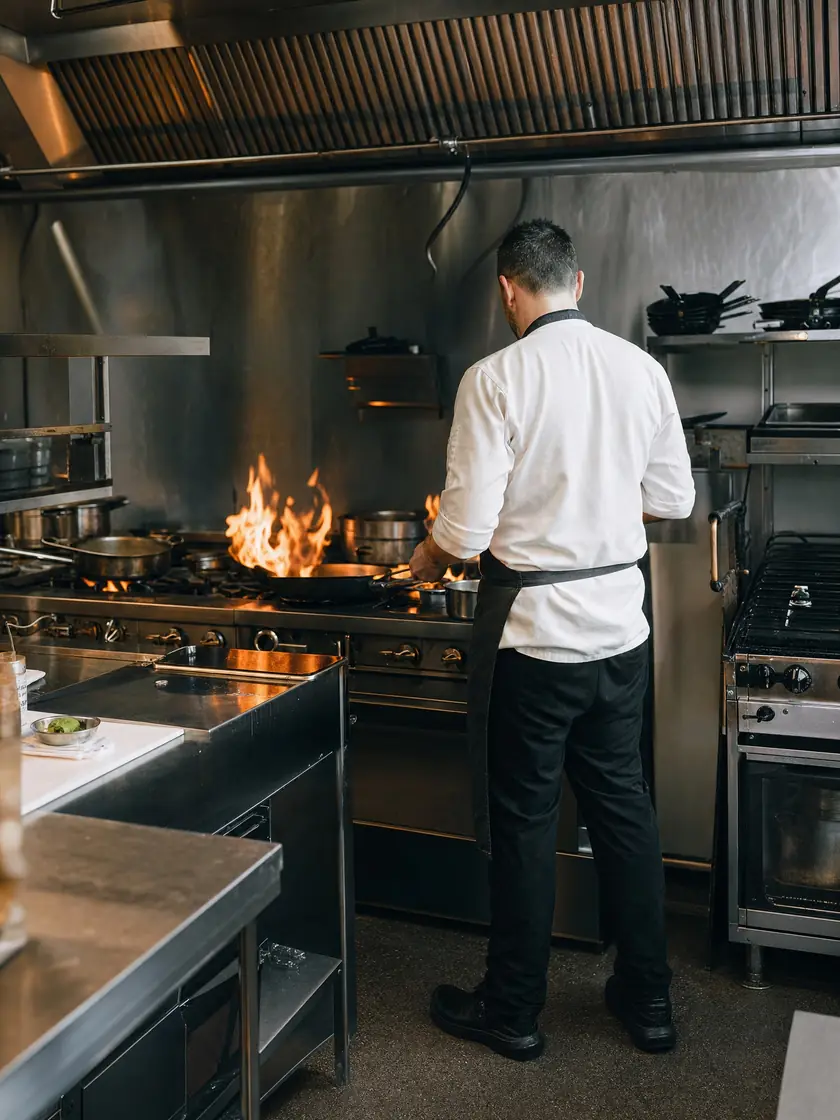
+If grease ignites inside the kitchen extraction system, the fire can travel to other floors, neighbouring units and parts of the building nobody can reach. Grease deposits are a fire hazard that grows every shift, and a long gap between cleans lets grease build up and raises the risk of fire.
Your Insurance Cover and Legal Position Can Be at Risk
+Insurers can ask for documented evidence of kitchen extract cleaning. If you cannot show it after a fire, a claim may be harder to settle. Check your insurance requirements.
Under the Regulatory Reform (Fire Safety) Order 2005, commercial premises must keep fire safety equipment in efficient working order and good repair. Your kitchen extraction should sit inside your fire risk assessments. That is a legal requirement, and the safety regulations expect proof. Regular cleaning and clear records help you meet them.
Dirty Ducts Also Hurt Airflow, Air Quality and Running Costs
+Extraction cleaning is not only about fire. Grease buildup narrows the ductwork of your extraction system and clogs the extractor fans. That cuts airflow, raises heat and odours and strains fan motors, so system efficiency drops.
Regular cleaning keeps your kitchen ventilation system working, lifts air quality and supports ventilation hygiene. Better air quality helps you meet hygiene standards and gives your team a healthier working environment. Poor air quality drifts into the dining area, and a clean ventilation system with good ventilation hygiene keeps odours out.
 Fire risk
Every Cleaning Visit Comes With Post Clean Documentation You Can Show Your Insurer
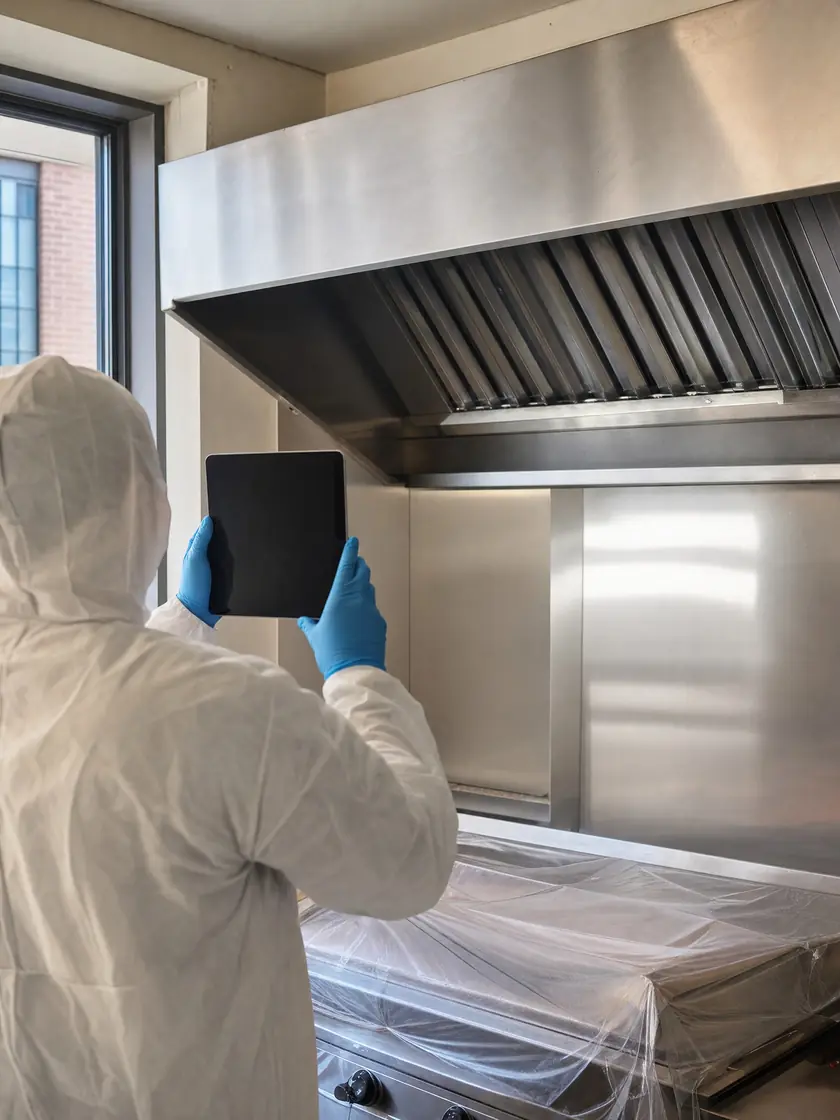
After every kitchen extract cleaning visit you get post clean documentation, with before-and-after photographs, pre- and post-clean readings and certification.
Our comprehensive report lists the extraction system we cleaned, any sections we could not reach, the condition before and after, and the date we suggest for your next clean. This photographic evidence and detailed documentation show your fire risk assessor and insurer what was done.
 Documented
How Much Does Kitchen Extraction Cleaning Cost?
Costs for kitchen extract cleaning vary based on system size and how often the kitchen runs. These are our rough prices based on recent projects, per cleaning visit and plus VAT:
- Small café, takeaway or small restaurant: £450 to £900
- Standard restaurant or pub: £900 to £1,700
- Hotel or large commercial kitchen: £2,000 to £3,500 and up
A large extraction system with long duct runs, hard access, heavy grease and missing access panels pushes the price up. Professional cleaning costs far less than a fire, and our cleaning service is priced per visit.
The price is a rough guide and the actual cost varies. Please use our contact form for an accurate quote.
Why Merseyside Businesses Choose No Mess Too Much for Kitchen Extract Cleaning Services
Expert Technicians and Clear Paperwork on Every Visit
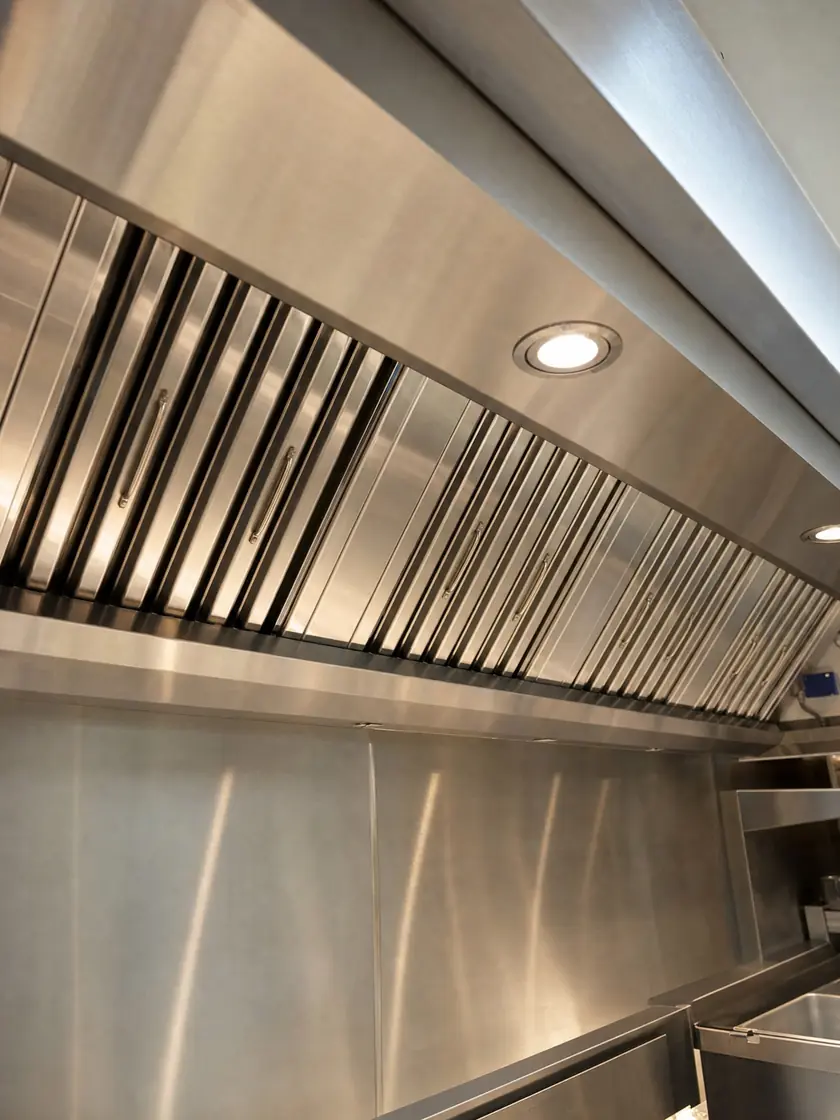
+We send expert technicians who follow recognised industry guidance and clean commercial kitchens to industry standards, so your extraction system stays within the safety regulations. Our kitchen extraction cleaning services come with excellent service from first call to final report, as our reviews show. We help you reduce fire risks and the risk of fire with a plan that matches how you cook.
We Fit Around Your Opening Hours and Your Staff
+A closed kitchen costs money, so as a specialist cleaning company, we book our kitchen extract cleaning service before you open or after you close. Your kitchen cleaning stays on track.
 Why choose us
Get Your Free Kitchen Extraction Cleaning Quote From No Mess Too Much Today
Ready to cut your fire risk? Fill in our contact form with your details and we will send you a free quote.
Book our cleaning service for your commercial kitchens with No Mess Too Much and keep your kitchen operating safely.
 Free quote
Questions about kitchen extraction cleaning
Straight answers from the people who do the work.
How much does kitchen extraction cleaning cost?
Kitchen extraction cleaning costs roughly £450 to £900 for a small café, takeaway or small restaurant, £900 to £1,700 for a standard restaurant or pub, and £2,000 to £3,500 and up for a hotel or large commercial kitchen, per visit plus VAT. This is a rough guide and the actual cost varies with system size, duct length, access and grease levels, so please use our contact form for an accurate free quote.
How often must kitchen extraction be cleaned?
Kitchen extraction should be cleaned every three months for heavy use, every six months for moderate use and once a year for light use. Under TR19 Grease from the Building Engineering Services Association, heavy use usually means 12 to 16 hours a day, moderate use 6 to 12 and light use 2 to 6, including prep time. Fryer, wok, chargrill and solid-fuel cooking can mean more frequent cleaning, so we build the schedule around your menu.
What does kitchen extraction cleaning include?
Kitchen extraction cleaning includes the canopy, filters, ductwork and extractor fans, from the hood to the roof fan. We open the access panels to reach hidden grease and carbon, using mechanical high-pressure cleaning and specialised methods for baked-on grease. Every job starts with a survey of your system size, cooking style and insurer expectations.
What happens if kitchen extraction is not cleaned?
If kitchen extraction is not cleaned, grease builds up inside the ductwork and raises the risk of a fire that can travel to other floors and neighbouring units. Dirty ducts also cut airflow, raise heat and odours and strain fan motors. Insurers can ask for documented evidence of cleaning, so a claim may be harder to settle without it.
Is kitchen extraction cleaning a legal requirement for commercial kitchens?
Kitchen extraction cleaning forms part of your legal duties under the Regulatory Reform (Fire Safety) Order 2005, which says commercial premises must keep fire safety equipment in efficient working order and good repair. Your kitchen extraction should sit inside your fire risk assessment, and regular cleaning with clear records helps you show you meet the safety regulations.
Do you provide documentation after kitchen extraction cleaning?
Yes, we provide documentation after kitchen extraction cleaning, including before-and-after photographs, pre- and post-clean readings and certification. Our report also lists any sections we could not reach and the date we suggest for your next clean, so your fire risk assessor and insurer can see what was done.
Other commercial work we do
Ready when you are
Tell us what you are dealing with. A real person answers, a clear price follows, and the job is done quietly.
No Mess Too Much · 0151 380 0783 · Kitchen Extraction Cleaning across Liverpool, Wirral, Sefton, Knowsley and St Helens